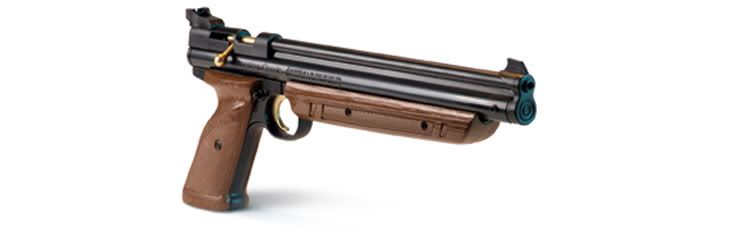
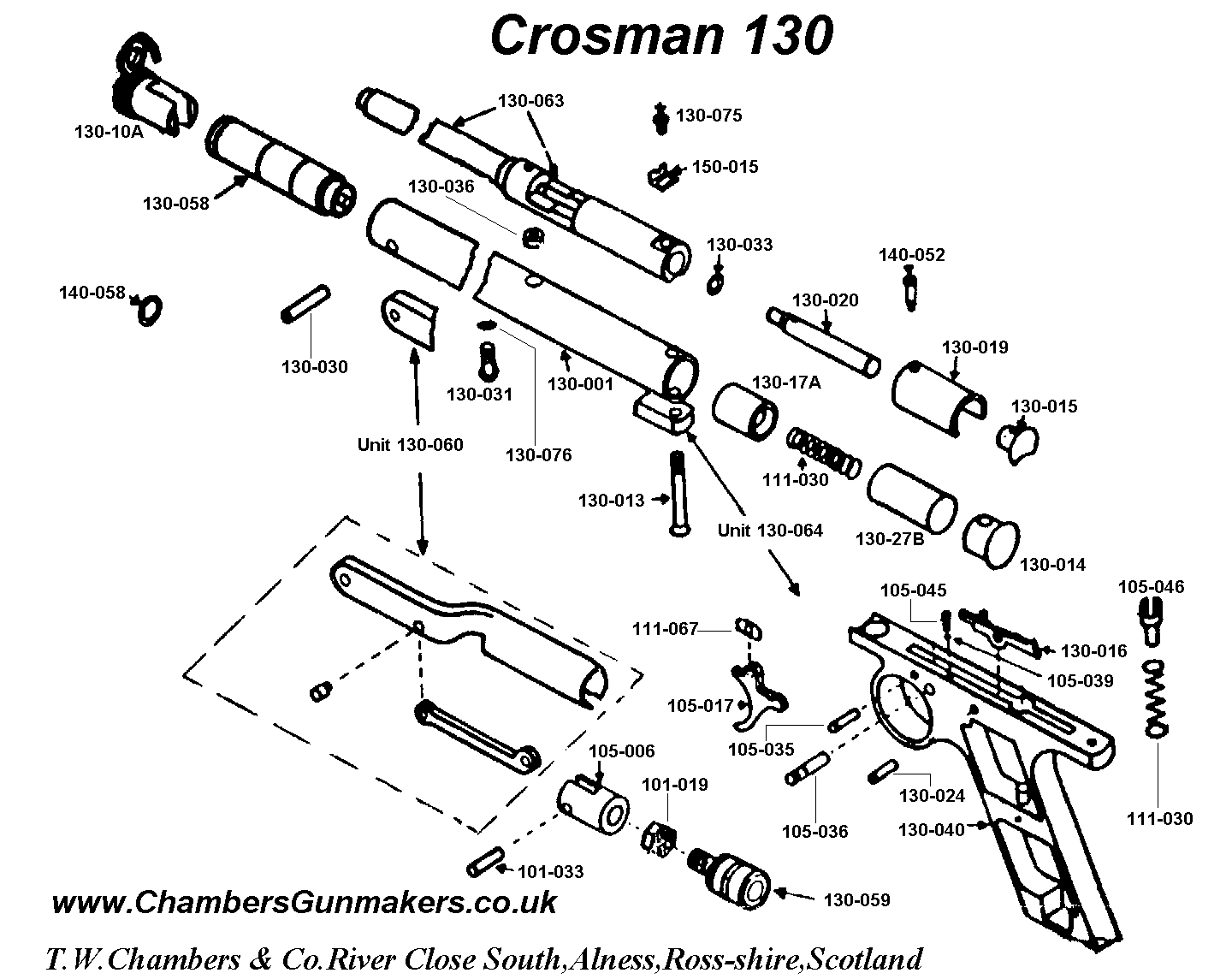
 Over 40 years ago I had a fascination with handguns but neither the money nor the age necessary to indulge my youthful fantasies. I don't remember quite how, but I finally prevailed on my parents to allow me to purchase a Crosman 130 in .22 caliber. Suffering from years of inexperience I was convinced the .22 would hit harder. I'm not completely certain now, but I think I got mine at a department store called Town and Country in the Cloverleaf Mall in Harrisonburg, VA. At least I had the great good fortune, maybe even intelligence, to pick one of the most successful air pistols of all time. I know this one gave good service.
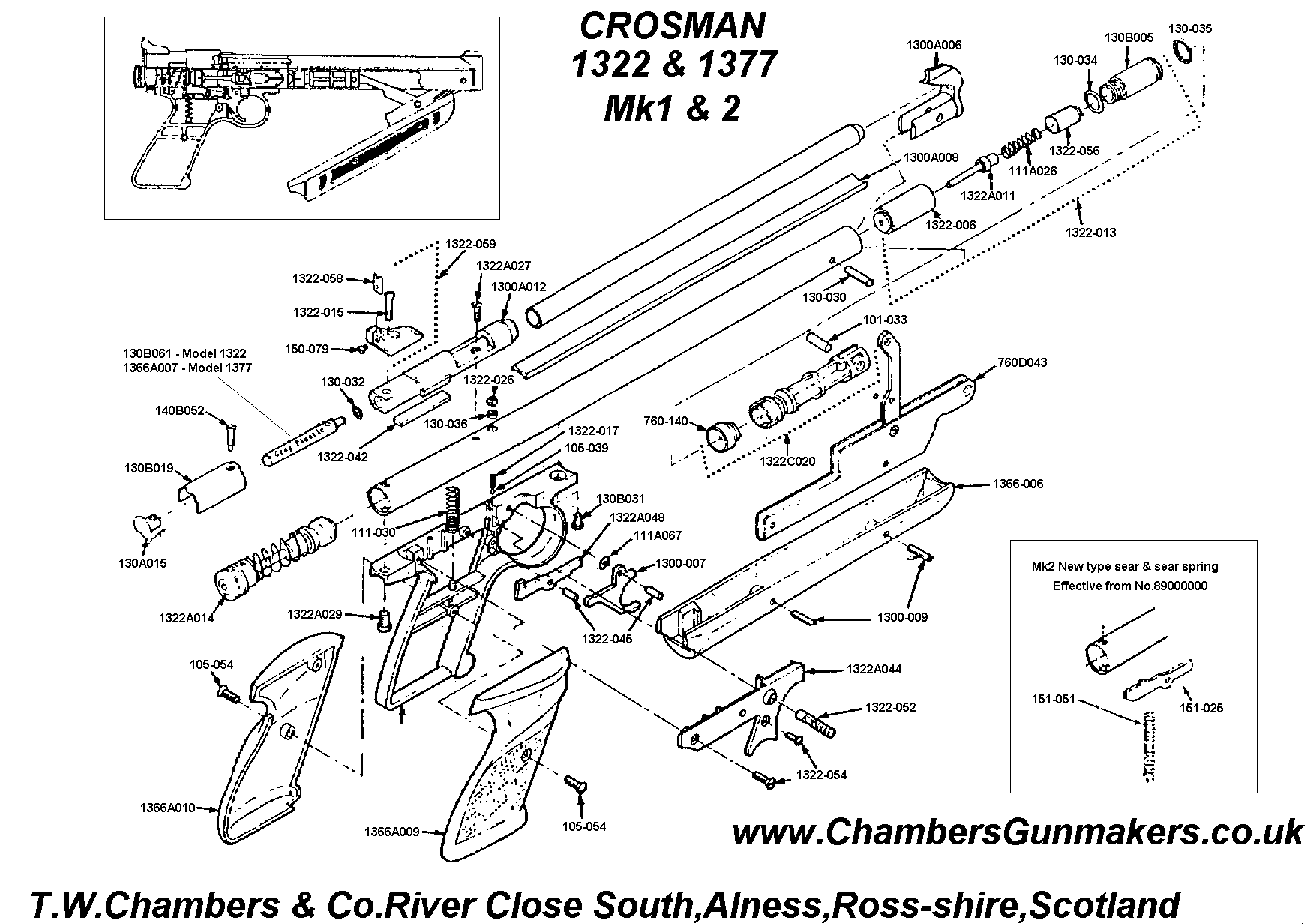
 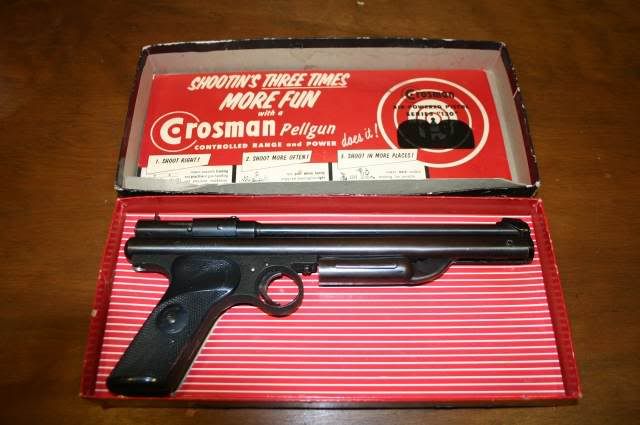 The Crosman 130 pneumatic was made from 1953 to 1970. It was a multi-pump pneumatic in .22 caliber (there was also a .177 caliber). These guns replaced the model 105/106 multi-pump pistols that had been in the Crosman line since 1947. Where the 105/106 guns were conventional in all ways, the 130/137 were considered innovative. When they over-pumped them, the valves would lock up and the guns would either fire very weakly or not at all. To prevent over-pumping, Crosman engineers invented a new type of valve that worked much differently. Instead of knocking the valve open with a heavy hammer, the new valve used the trigger to hold the valve shut until the trigger was pulled and released the air. The only bad thing was that the trigger pull gets heavier and rougher as the air pressure increases. Maybe this is why I'm so insensitive to trigger pull variations.
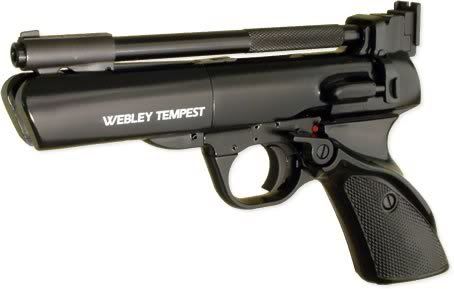
I now know that isn't necessarily true that bigger is better, at least in the airgun world. My replacement air pistol was a Webley Tempest. It is a .177 caliber gun and has served me well. Still, that .22 gave me a lot of confidence at the time. After some 10,000 pellets fired downstairs into my cardboard box trap, I knew I could hit what I wanted to hit when I wanted to.
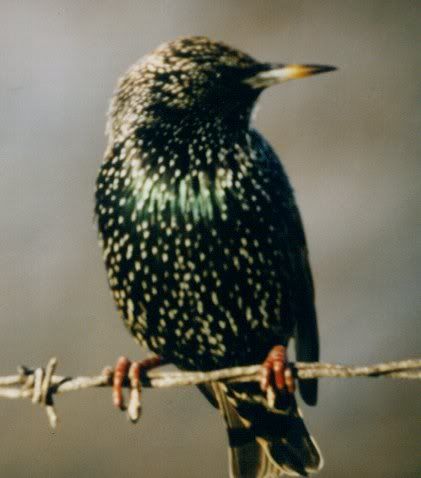 You see, my biggest quarry was the hated European Starling. Yes, my dad detested these birds. Consequently, he didn't mind my shooting them right off his bird feeders where they were competing with Grosbeaks, Mourning Doves, Cardinals, and other song birds for seed.
 My bedroom window was a tape measured 55 feet from the bird feeder. Right next to the bird feeder was a Sweet Gum tree. The birds would go back and forth from the tree to the feeder or the sunflower seed on the ground feeder. I would attempt to wack all the starlings possible. It is interesting, but the other bird species soon figured out that they were not the target of my tender ministrations. Flying pellets soon came to be of no concern to them and I never betrayed that trust. There were one or two problems though.
The first problem was that the starling has a natural breast shield of feathers. Well, it is a shield to the flat nosed pellet. That was the second problem.
In those halcyon days, the widely unfettered use of .22 Shorts or .22LR shot cartridges in many areas had precluded a need for a quieter substitute. Pellets were readily available in one flavor only and that was with the big flat nose. Excellent for use on paper targets and cutting sharp, easy-to-score holes in same but not so good as a penetrator on "game". After a few solid "wacks" on starling breasts only to see maybe one downy feather fall to earth (and twice to find the undamaged pellet on the ground!) without a dead bird, I knew I had to do something. But what?
At first I thought that all I needed was more velocity. I pumped up that poor gun until my arms ached but if I got more velocity it did no good and likely it damaged/wore the pistols seals more. My next thoughts were that I needed a sharper bullet point and that I needed more bullet weight. I looked around for usable source.
The first source was .22 Short ammo. I pulled the bullets, dumped the powder charge in the garden and, when nobody else was home, shot the now empty cases in my dad's 72 (I should have simply reseated the bullets! We didn't know about CB caps at the time.) I tried the bullets both with the heel (a 29 gr. bullet) but they seemed too heavy for the gun and velocity was pitiful but when I cut the heel off using my pocket knife I got a usable projectile and got a couple of starlings with those. Unfortunately Dad "cut off" my source of .22 Shorts. What to do now?
I had read somewhere about casting lead cores for swaging bullets. Obviously I didn't have much money and not nearly enough to design and swage my own pellets but I did have some lead and solder. So, I made lead "wire" by casting lead in a channel in sand in the yard. I then rolled lengths of this "wire" between two steel plates to make it "round" and cut it to pieces about the same length as my abbreviated .22 Short bullets. I then filed the bases flat and made the noses pointy with "well-aimed" taps from a small tack hammer. These VERY crude projectiles weren't all that accurate compared to the factory made flat-point pellets but they sure did penetrate.
Along the way, I noticed that accuracy was difficult with a handgun (surprise!) and tried an approach that I'd seen used with the Broomhandle Mauser. I.e. I took a balsa wood "board" purchased at a hobby shop and carved a butt stock that cradled the gun at the butt and lower rear of the receiver. This worked fairly well improving my hit rate but the butt wasn't attached to the gun and one had to put it together for every shot.
Sadly, my experiments and depredations on the wiley starling came to an end as my 130 finally died. Improperly maintenance, over pumping, use of too heavy projectiles and wear from firing (likely more than 20,000 times) was too much.