Showing posts with label Ammunition. Show all posts

Wednesday, August 31, 2011

Interesting Cartridges

Some people collect cartridges, I accumulate whatever comes my way, and so there is always interest in this subject.  At my OTHER job at The Spoils of War I was asked to identify cartridges that came in a jar of cartridges that was apparently somebody else's accumulation.

Now, while there are exceptions, most cartridges are only going to be worth a couple of dollars.  The manager doesn't have too much into these so we might make some money, if we don't get greedy.

Right from the get go I noticed there was some interesting things in there.

There are several .25 Stevens Short cartridges and two .25 Stevens Long cartridges.  I've written about the cartridge before.  It interests me.  At Nuckol's we had a three BOXES of these come in about a month ago.  All went to the boss man's collection.  Those were worth over $500. A cartridge is going for about $2.50-$3.00 now. 

There was one .45 Spanish M89 Reformado cartridge.  This cartridge was designed to replace the .43 Spanish cartridge and is the most common round (other than the 7x57) used against the U.S. soldiers in Cuba in 1898.  It has a brass jacketed bullet.  Adoption of the cartridge required the re-work of all the .43 Spanish chambered rifles (Remington system) then in the Spanish government's inventory.

There were one each .40-82 WCF .50-110 EX and .50-95 EX W.R.A. Co headstamped cartridges.  Both the .40 and .50 caliber cartridges have jacketed softpoint bullets but the .50-95 has a lead bullet, apparently a swaged lead bullet.

There is a D.C. Co. 57 Snider headstamped, drawn brass, cartridge with what appears to be a swaged lead bullet. D. C. Co. is Dominion Cartridge Company. I always thought it was the .577 Snider but apparently this was shortened at least in some instances. I understand that there was a cadet sized cartridge and shorter than full length .577 Snider. Value on this would be about $15.00 or so.

There are three .50-70 Government cartridges headstamped U.M.C. S H 50-70. There is also a somewhat shorter, 1-3/4" COL, .50 caliber cartridge with a bullet that seems somewhat lighter than the 450 gr. Government cartridge bullet. This is the .50 U.S. Carbine, is outside primed and appears to be UMC manufacture.

There was one DWM SK 515A headstamped round, the FMJ RN bulleted 10.75x63mm Mauser.

.56-56 Spencer cartridges w/both versions of H headstamp
There is one fired .56-56 Spencer cartridge case. The .56-56 was the first cartridge chambered in the Spencer rifles and carbines. Ours has the raised "H" headstamp indicating Winchester production but of course it is just the cartridge case as it has been fired. Still interesting.

Many military collectors, especially those interested in the Indian Wars period, would be interested in the three .45-70 Government cartridges we have.  All were produced by Frankford Arsenal.

The first is stamped "F 4 88" indicating is was produced in April 1888 and has a 500 gr. lead bullet.  It does not appear to be "tinned" as are the other two cartridges but I think that it is.  The cartridge is just very "dark".  The second of the .45-70 Government cartridges is headstamped "F 5 90" i.e. it was produced in May 1990 and is tinned with a 500 gr. bullet.  The third is a bit unusual, or so it seems to me.  This last one is headstamped "F 2 91" and appears to carry a bullet of about 400 gr.  I believe this would be a carbine load.  Interestingly, all the bullets are seated to the same depth in the case with the result that the "carbine" load has a shorter length overall than the other two cartridges.

I was most surprised to find a .40-50 Sharps Bottleneck round in the jar.  Neat little thing.  It seems to me that you can barely see the paper patch peeking out of the case neck.  Possibly UMC manufacture.  Value about $5-7.

There is also a German fva (=Draht-u. Metallfabriken G.m.b.H., Salzwedel, Germany) 1 44 headstamped 7.92x33mm or 7.92 Kurz cartridge. The lacquer is pretty much gone. Value about $1.50 in this condition.

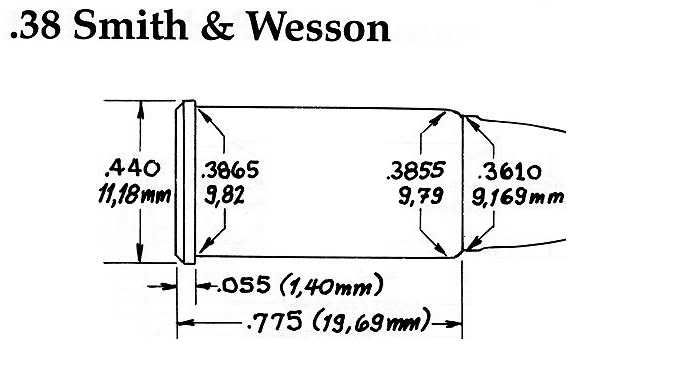
The last cartridge I'll add a description of to this accounting is one headstamped for Leon Beaux & C. This is a rimmed cartridge of the dimensions of the .38 S&W marked 380 and appears to be inside primed! Interesting.

Quite a few cartridges in this cache...


Saturday, June 18, 2011

.224" bullets

Like many others, I shoot a variety of .22 caliber cartridges.  .22 Hornet, .218 Bee, and .223 Remington/5.56 NATO.  I'm not into the big .22s like the Swift, .22-250 or .225 Winchester.  I've no use for them.  These are the bullets I'm currently using in my .22 caliber rifles.  I initially took this photo because I thought it would be interesting to compare them to the current and former standard military bullets.

Starting with the littlest on the left we have the Hornady 35 gr. VMAX.  A "ballistic tip" bullet, you can see it isn't as aerodynamically shaped as the others.  In fact, I've heard it referred to as "a brick" for its lack of aerodynamic shape.  The ballistic coefficient (BC) for this bullet is .109 and the sectional density (SD) is .100.  However, this bullet seems to be a good one and fairly popular.  It will give me 1-1/2" groups in the .22 Hornet even with mixed brass.  It also provided an instant kill AND complete penetration on a ground hog at only 10 yards.  I don't think this bullet opens too quickly and yet it certainly opened quickly enough.  Over 13 gr. of Lil'Gun it gives about 3000 fps from the Hornet. All together that's plenty good enough performance for me.  However, when I've shot up my stock of these bullets I'm going to switch to the next bullet for the Hornet, just to reduce the number of different bullets on the shelf.

Next is the 40 gr. VMAX.  As you can see it is quite a bit more aerodynamic than the 35 gr.  What a difference just 5 gr. in bullet weight can make in bullets of this diameter.  The BC is up to .200 and the SD is .114.  I've been loading this bullet in the the .218 Bee over 14 gr. of Lil'Gun which, if memory serves, moves it along at about 3100 fps.  However, speed isn't the only thing and this bullet is pretty accurate in my custom Contender barrel.  Groups from the bench unsupported position average around 1" and some-times I can manage tiny cloverleafs at 100 yards.

Third from the left is the standard 55 gr. FMJBT for the 5.56mm cartridge.  I bought 5000 of these in bulk for loading for my old Colt SP-1 sporter carbine.  This is the same bullet used in the military's M193 cartridge.  I don't suppose there's anything really wrong with it.  This bullet is what my old gun's barrel twist rate seemed to demand and I was only using it for practice so the FMJ design wasn't a handicap.  However, FMJ bullets are illegal for hunting in many places, even for forbearing animals, and so a better solution is needed for my current 5.56mm AR-15 type rifle.  BC is .243.

Fourth, with the remnants of tar is the 62 gr. green-tip bullet.  Pulled from loaded ammo this is the current standard bullet in 5.56mm M855 cartridge.  BC is .304.  I got this ammo just to compare it to my own handholds with the next bullet and so I haven't shot it much.  I really have no use or need for an FMJ bullet if I can get soft points at a low enough price.  By the way, the U.S. military is shortly going to (they may have already done so) introduce the M855A1 bullet.  The weight is the same but the new bullet is politically correct and lacking lead (and green tip) so that it doesn't pollute the poor schmo a soldier might shoot with it.

That cheap and bulk packed bullet is second from the right (fifth from the left) and it is the 64 gr. Winchester Power Point.  I've been told this is the same bullet the California Highway Patrol uses in their ammunition.  As those patrol rifles have to take care of a number of scenarios, I expected this bullet to be a pretty good one and it seems to be.  Of course I'm using it in the 5.56mm/.223 Rem cartridge (yes, I know they aren't exactly the same).  In some states (maybe even Virginia in the near future) it will be legal for deer.  BC for this bullet is .234 and SD is .182.

Last is the 77 gr. Sierra BTHP.  With a cannelure this is the bullet that is specially loaded for certain military applications.  Due to this "elite" cachet it is quite in demand, cannelure or not.  I bought 100 to try in my new AR-15 carbine.  Even though that gun has a 1 in 9" twist rate I was concerned that the bullet wouldn't stabilize.  Most seem to think that the 1 in 7" twist is necessary to stabilize this bullet.   Then again, just because a barrel is labeled with a particular twist rate it might vary a bit, fast or slow, depending on how it was rifled.  The barrel in my gun seems to stabilize this bullet but I'm going to do some more testing at 150 yards just to be certain.  I like the looks of the long slender bullet but it does intrude below the shoulder of the .223/5.56mm case and that concerns some people.  I have been using WW748 for all my loads in this cartridge and it works just fine.  I don't think I want to change.

Links:
ASSAULT RIFLES AND THEIR AMMUNITION: HISTORY AND PROSPECTS by Anthony G. Williams

Saturday, June 11, 2011

Available Ammo

What ammo is on hand in the Hobie hut? I should begin with another gun nut enthusiastic collector's assortment but I've lined out that which I don't have.

.45ACP
.44 Magnum
.44 Special
.44-40
.41 Magnum
.357 Magnum
.38 Special
.22LR
.32-20
.22 Remington Jet
9x19mm
.32 S&W Long
.32 H&R Magnum
.38 S&W but I do have a bullet mold for the 146 gr. bullets.
.32 S&W
.32 rimfire long
7.62x38 Nagant
.25ACP
7.62x25 Tokarev
.32ACP
.380ACP
.455 Webley Auto
.38ACP
.577-450
.303 Brit
10.4x38R Swiss
7.5x55 Swiss
11x59R Gras
8x51R Lebel
7.5x54 French
6.5x52 Carcano

8x56R
6.5x54 M-S
7.62x54R
8x57JS
11x60R Mauser

7.62x51 NATO
8x50R Siamese
.300 Whisper

6.5x55
7.65x53
.30-'06
7x57
7.7x58 Arisaka
6.5x50 Arisaka

.45-70
.30-40 Krag
5.56x45
7.62x45
.243 Winchester
.405 Winchester


but I have some she doesn't have...
.22 CB
.22 Short
.22 WMR
.22 Hornet
.218 Bee
.25-35 Winchester
.250 Savage
7mm TCU
7-30 Waters
.30 Herrett
.30 WCF (.30-30)
.300 Savage
.32 WCF (.32-20)
.35 Remington
.38 Colt
9x18mm Makarov
10mm Auto
.45 Auto Rim
.45 Colt
.45-75 WCF
.410 bore shotgun
28 gauge
20 gauge
16 gauge
12 gauge

When you have stocks of some 28 49 (!) different cartridges, you have a logistics problem. There is a need for space, for atmospherically safe space, for fire-safe space, etc.

Hat-tip to Tam.

Wednesday, July 07, 2010

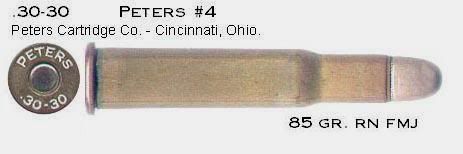
Peters .30-30 "Trapper" load by John Kort

An interesting .30-30 cartridge used back in the 1930’s-1940’s by Trappers in the north country

Image

Legend has it that these special .30-30 cartridges were loaded by the PETERS Cartridge Company for the Hudson Bay Trading Co. located in the Yukon and possibly the T. Eaton Company in Alberta, Canada.

It was loaded with a full patch 85 gr. bullet that was used in the .30 Mauser pistol cartridge. One trapper, recounting his adventures of long ago, said that he had used the .30-30 cartridges with the little nickel jacketed bullet and found that they were great for dispatching Wolverines and Wolves in traps and for shooting wolves on the ice in the winter and beavers in the spring.

The question then was, what velocity did PETERS load this cartridge to? John had one example of this cartridge in his collection and donated the powder charge from it to me for testing purposes.

Several years ago Hornady made a run of 86 Gr. full patched .30 Mauser bullets for The Old Western Scrounger. I purchased a box to run some tests. I loaded one of these bullets over the powder charge that John had sent to me and it clocked just over 2,000 f.p.s.

I then loaded 10 rounds using the Hornady 86 gr. bullet with 27.0 grs. of 3031, which appeared to be the same type powder. (The powder sample could well have been DuPont 17 1/2 the predicessor to 3031.) When tested, they produced pretty much the same velocity.

Accuracy at 50 yards was very good with groups of around 3/4" if I did my part. Further testing indicated that 170 gr bullets loaded over 30/3031 impacted within 1 1/2" of the 86 gr. bullet.

Hunters/trappers could use both cartridges without having to change their sights. PETERS knew what they were doing when they offered a .30-30 catridge with a bullet that was ½ the weight of the standard 170 gr. and loaded it to the same velocity.....60+ years ago.

John Kort

addendum:
In developing this special cartridge, PETERS intent was to produce a .30-30 round which could be used for the purpose described above and that could be used interchangeably with the standard .30-30 170 gr. for big game when it was encountered. In addition, it would produce almost no recoil.

This historic, special, PETERS 85 gr. cartridge added a new dimension of usefulness to the .30-30, making it an even more versatile tool in the hands of the outdoorsman.

Monday, March 22, 2010

Winchester Ammo Boxes

Interest in one aspect of shooting often results in interest in some other aspect. Some folks actually commit money and time to the effort. Rick Bachman has managed to accumulate these ammo boxes for Winchester 1876 ammunition.

Check out the late (circa 1915) box of .40-60 WCF. Look at the model designation at the bottom of the label. It says for Model “86. This is a very rare “error” label box. This is actually a sealed, unopened box. I’ve had it in my collection for nearly 45 years.


UMC box .40-60 WCF circa 1890


Winchester box .40-60 WCF circa 1892


Winchester box .40-60 WCF circa 1915


Winchester box .45-60 WCF circa 1890


Winchester box .45-60 WCF circa 1900


Winchester box .45-75 WCF circa 1883


UMC box .45-75 WCF circa 1895


Winchester box .45-75 WCF circa 1898


Winchester box .50-95 WCF circa 1881


UMC box .50-95WCF circa 1895


Winchester box .50-95 WCF circa 1895

Friday, January 22, 2010

Has this story been told before?

First we had the .36 caliber percussion revolver which really had a .375-.377" groove diameter. Then we had cartridge conversions which used heel type bullets of correct diameter for the bore which led to the cartridges being called .38 caliber. Then we had the inside lubed bullet due to Russian influence and practicality and the bullet fit in the same case came out to about .358". Then we had bores to match the new bullets but the cartridge name didn't change. Then the .38 Colt was lengthened and eventually we have the .38 S&W Special, .357 Magnum, .360 Dan Wesson and .357 Maximum. Of course the .357 Max is very similar to the .38 Extra Long but not to confuse things...

In between, in years of transition we experimented with hollowbase bullets which got even more "bumped up" due to BP's characteristics and even using the same bore for both the .38s and the .41s...

Isn't life interesting?

What IS really interesting is that the .38 Colt eventually won the .38 (actually .36) revolver cartridge war and the .32 S&W (actually .312) eventually won the .32 revolver cartridge war lengthening to become the .32 S&W, .32 S&W Long, .32 H&R and now the .327 Federal whereas the .32 Colt and .32 Long Colt have only now been given a new lease on life due to the vagaries of the cowboy action shooters.

 So, what is the real "genealogy" of the various .38 cartridges?  Well...

There once was the ".36" caliber Colt revolvers (which established a standard of sorts), with .36" (nominally) bores but .375" (nominally) groove diameters.  When brass cartridges became the in thing and the guns were converted, the cartridges used bullets that approximated the groove diameter.  Due to the technology of the time, these were outside lubricated, heeled bullets like our modern .22 Long Rifle (and shorts and longs and CBs...)  These bullets had drawbacks such as leaving lube in pockets where ammo was carried, picking up dirt and other trash, or worse, being wiped clean off!  Also, when carried a lot, the bullets would come loose from the case.  Something was bound to change.

The Russians might have been the ones to get the ball rolling when they ordered a bunch of Smith and Wesson pistols but insisted that the cartridge for which they were chambered carry an inside lubricated bullet (the .44 Russian instead of the .44 American).  The advantages of inside lubricated cartridges were obvious and immediately in demand.  Makers at first tried to use these inside lubricated bullets in the old cartridges resulting in bullets severely undersized for the bores in which they were being shot.  After a bit, the bores of the revolvers were adapted to the new cartridges by being reduced to .357" (nominal groove diameter measurement) but were still referred to as "thirty-eights".  The .32s went through a parallel development but the cases were made a bit bigger to accommodate the necessary .312" bullets.  Of course, the peculiarities of the market, relative popularity of certain firearms, and so forth worked to bring certain cartridges to the forefront.  The .38 Colt became the .38 Long Colt became the .38 S&W Special (S&W's co-opting of the Colt military cartridge to their own benefit) which became the .357 Magnum which became the .360 Dan Wesson and the .357 Maximum.  S&W tried their own .38 centerfire with the 36/38 caliber in the "Baby Russian" in 1876 (using .36 caliber bullets and .380" diameter brass and later referred to as the .38 S&W beginning about 1877) but it didn't achieve the same level of popularity (again, it uses a .361" bullet) nor did it become a military cartridge in this country which is why S&W didn't use it to create the "Special".  However, the S&W cartridge did get military, para-military and police use elsewhere mainly in Great Britain and its colonies (and former colonies) as the .38/200 or .380/200 later known as the .380 MK I or MK II and I suppose somebody might find ammo marked with the metric designation as 9.1x20R.


On the other hand, S&W had started early with .32s in their rimfire .32 for the Model 2 and had so much market share that Colt switched from chambering their revolvers for the .32 Long Colt to the .32 New Police (a .32 S&W Long with a flat meplat on the bullet), so called to avoid putting the S&W name on their revolvers.

The cartridges from these two design paths have different case diameter so one has to know what is what when buying or reloading ammo.  To further complicate the issue, there are rimfire equivalents and the cartridges were also used in various rifles.  For example, the Marlin 1892 .32s chamber the .32 Colt Long and came with firing pins that could be used with either the centerfire or rimfire versions.  However, some of those rifles have been rechambered to use the more easily found .32 S&W Long. 

So, to run the .32s down (for the centerfires) we have the .32 S&W which begat the .32 S&W Long which begat the .32 H&R which begat the .327 Federal.  So far as I know, the .32 Colt begat the .32 Long Colt and then the line died.

We should note that many of these older cartridges were on the razor edge of absolute death until cowboy action shooting came along.  That game certainly excited a lot of interest in the old cartridges both for reasons of nostalgia and because they are very mild recoiling and period correct.


Saturday, October 10, 2009

What ammo to buy or load...

I've been noticing for several years now that many shooters buy "range" ammo and use specific ammo. Sometimes they call this "range" ammo, "blasting" ammo. There are variations on the theme but a good example is this glut of 130 gr. FMJ .38 Special stuff when most thinking people load their "carry" or "bedside" gun with some sort of +P hollowpoint. They seem to do the same sort of thing with their AR-15s and mil-surp guns.

For my own part, I tend to buy or, more likely, load ammo for "using" or practice the same. I don't have "range" ammo much less "blasting" ammo. I want all my ammo to be usable. I want my practice to be with the ammo I use (for hunting, self-defense, etc...). I do this because it hits to the same point of aim, because a problem with it will more likely become apparent the more it is shot, because I don't want to spend money on something that is only good for the range, because I don't want to have to sort through my ammo to find something useful when I need it right now.

I've tried to feel out the customers at the shop where I work. Most don't reload. They buy the high dollar stuff for hunting or self-defense but will "practice" with just about anything, price being the deciding factor even if the point of impact will vary widely from their "using" ammo.

I can see the idea of "plinking" ammo that is cheaper to buy or produce that duplicates the exterior ballistics of the "using" ammo. However, if it fails to shoot to point of aim at all ranges at which the particular firearm will be used, it seems a waste of time shooting and of money. The thing is that "plinking" ammo (probably much more apropos to .22 LR than anything else) isn't as useful in a pinch as the "real" thing.

Thursday, December 11, 2008

Cartridge Adapters


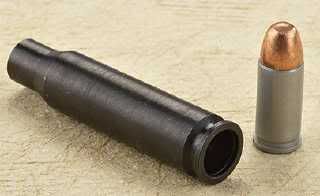
I recently bought two cartridge adapters from Sportsman's Guide. I got one each in .308 Winchester and .303 British. These allow the use of .32 ACP cartridges in rifles chambered for the adapter cartridge. This would be very handy in allowing the taking of small game without the need to fire a full-power load and the adapter is readily distinguishable from a standard cartridge. I can't wait to get my guns out there and try this. However others have reported good success with these and other, similar adapters from other sources.

Basically a steel cartridge for a .30 or .31 caliber center-fire rifle such as the .308 Winchester, .30-06 Springfield or .303 British (in the "case" of the Sportsman's Guide product) which is itself chambered for the .32 ACP cartridge. One of these is shown in the accompanying photo. These have been around for a long time and versions have been made to chamber a variety of suitable smaller catridges in larger chambered rifles with appropriate bores.

Tuesday, September 16, 2008

.303 Cache

A poster on the Leverguns forum had a link to his album wherein was a photo of this cache of .303 Savage ammo. Gotta love it. If I had this much .303 Savage ammo I'd have a .303 Savage rifle.

Wednesday, August 01, 2007

Primers and Ammo

I bought CCI Large Pistol primers the other day at $33.60 a thousand (with discount). Bought CCI Large Rifle primers shortly thereafter at $25 and change a thousand (no discount). Then today I bought Winchester Small Pistol primers at $20.50 a thousand (with the discount. All from the same dealer. Also, a brick of Winchester Super-X .22 LR 40 gr. "solids" was $24. Again with discount. Prices on components and ammo are rising.

I was asked if I was "getting ahead" on primers. Without giving me time to answer Ernie said it would be a good thing. He said that Federal had told him that they didn't expect to put new primers in the pipeline for two years as their entire production was going to ammo and much of that to the US Government contracts. I suggest that if you're a Federal primer user you get what you can while you can.

There are a lot of reasons prices are going up. #1 seems to be metal prices. Chinese demand is a big nfluence in the market for these and other raw materials such as cement. #2 seems to be energy costs. Energy to mine, smelt, and ship both refined metals to the plant and ammo and components to the wholesalers and beyond. #3 is ammo and component producers are experiencing huge demand for and are contracted to produce prodigous quantities of ammunition. Not only is ammo being used by our own forces in the war but the US is contracting for ammo for Iraq and Afghani forces and stockpiling for contingencies.

This last, #3, reason is the reason Jamison International is giving for not producing .45-75 brass. Phooey!

Saturday, July 07, 2007

.303 Brit Ammo Carry

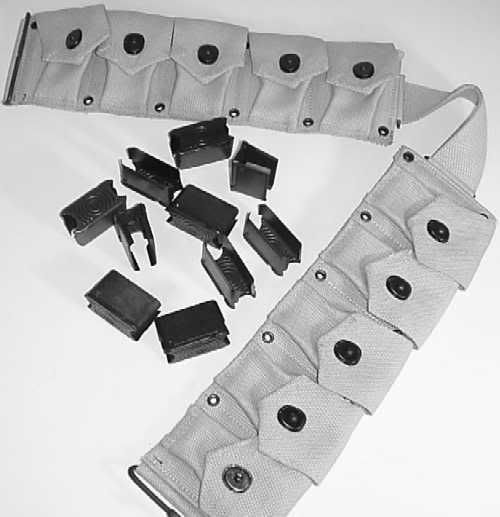
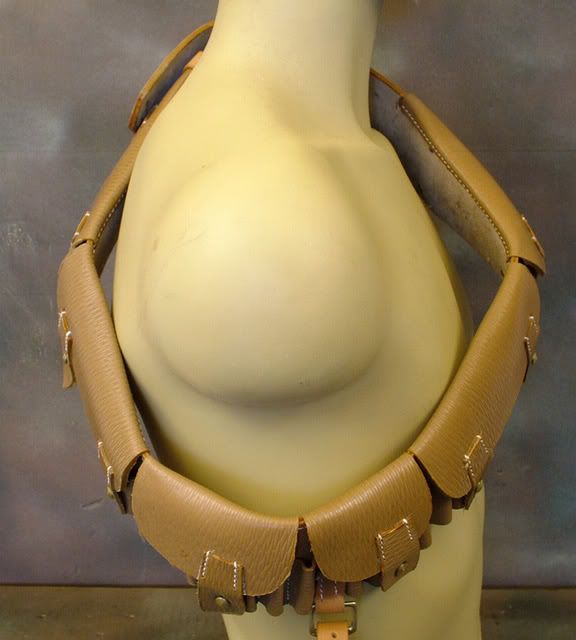
Having a No 4 MK I rifle and needing to have some "authentic" method of carrying a "few" rounds of spare ammo, I started to cast about for some sort of ammo belt. So the first thing I tried was the US issue ammo belt. 2 stripper clips of .303 fit quite well in each of the 10 pockets giving the bearer 100 rounds of .303 Brit and quite a load around the waist! However, access is quick and easy and the ammo is fairly well protected and not subject to corrosion while in the woven canvas belt.

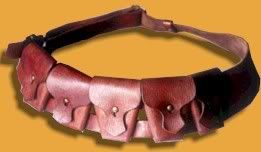
But frankly, I was thinking that the belt system was uncomfortable and one of those nifty "Light Horse" deals would be just the ticket. The first that I found was this 1917 made leather gear. The 1903 5-pocket bandolier, it cost me $35 at a gun show and I still think it was worth every penny. After a good working over with saddle soap, it seems to be in as good condition as when it was turned in to the supply sergeant after WWI! Worn over the left shoulder (to keep the right shoulder clear for the rifle butt), it is comfortable and bears the weight of 50 rounds of .303 British very well. However, I was concerned with verdigris and so don't store ammo in the bandolier. That is the same problem I have with my other neat piece of leather .303 gear. International Military Antiques sells a reproduction. Mine being original, I don't have any idea as to the quality of the repro, you're on your own. But I will repeat that the system works.

This bandolier, in which the .303 round are individually placed in the loops, is also leather and even more like to raise the ugly head of verdigris if one chooses to store brass cased ammunition in it. But, it works well for carrying ammo as well as providing rapid and easy access to that ammo. International Military Antiques sells this nifty reproduction. Not inexpensive but, unless you can produce one with your own leather working gear, worth the price.

Saturday, April 28, 2007

.22 Winchester Magnum Rimfire Ammo

Before I was distracted by a fantastic offer on a rifle (carbine) for which I've been waiting pretty much my whole life (see the blurb on the Winchester 1876 NWMP SWC)I was busy pulling together some .22 Winchester Rimfire Magnum ammo. I use the stuff in my Single-Six and Contender 16" barrel. Pretty handy around Mom's place for eliminating various pests in the .5-20 lb range. Properly placed from less than 50 yards it might do well on animals (e.g. coyotes) up to about 40-50 lbs live weight.

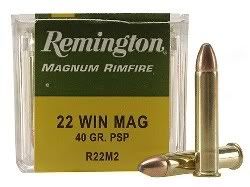
Right now I'm using the Remington 40 gr. PSP (Pointed Soft Point). Somewhere along the line I picked up a box and it shot pretty well so the other day I bought a brick. Not sure it is my favorite .22 WRFM load but we'll see.


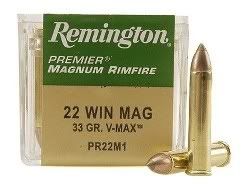
I'd already used most of a box of this really expensive Remington fodder with the VMAX bullets. Oh, it did a number on the groundhogs and it is accurate but it sure is expensive. Hard to justify a quantity of this as it is nearly $50 a brick more expensive than the PSP ammo.


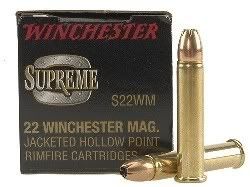
Some time ago I got a promotional box of 200 rounds of the Winchester 34 gr. HP ammo as shown here. It came in a plastic, MTM type box but the latch broke when I first opened it. It will also do a number on Mr. Woodchuck. However, with the Winchester rimfire plant in East Alton, IL not yet replaced by their Oxford, MS plant, you just have to get what you can where you can find it. A friend reported buying 1000 rounds for $50, I'd say he got a great deal as this ammo is retailing for more than $10 a box of 50.


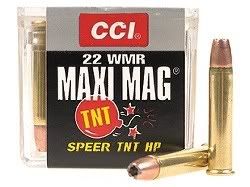
Both CCI and Federal are producing a premium .22 WRFM load using the Speer 30 gr. TNT bullet. The Federal load is pretty darn accurate in my contender carbine but I've never used the CCI product pictured here so can't report on it. I'm sure the bullet works well but a good load is more than a bullet. The price of the CCI is comparable to other premium .22 WRFM ammo or about $10 a box of 50 rounds.

Thursday, April 26, 2007

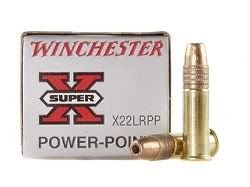
Winchester .22 LR Power-Point

The Winchester .22 Long rifle Power-Point ammunition is my favorite .22 Long Rifle ammo. The ammunition is consistent, the bullet quality is excellent, the design is effective and it is accurate in a number of my guns chambered for the .22 LR. It is the ONLY effective .22 HP in the short barreled pistols and revolvers. However, Winchester has closed the rimfire ammo plant in East Alton, IL and moved to Oxford, MS. The ammo is hard to find and costs an arm and a leg when you do find it. Midway USA shows the item out of stock and no backorder. They expect to have stock the first of June. I wonder. I'd buy a case (or two or three) of this stuff if I could.

In any "case" I've been buying .22 LR ammo. I can either shoot it or, if worse comes to worse, trade it. Prices are certainly rising on all ammo and it is a good thing to lay in a supply against possible shortages/controls.

Thursday, April 19, 2007

Buffalo Bore's Standard Pressure .38 Special Loads

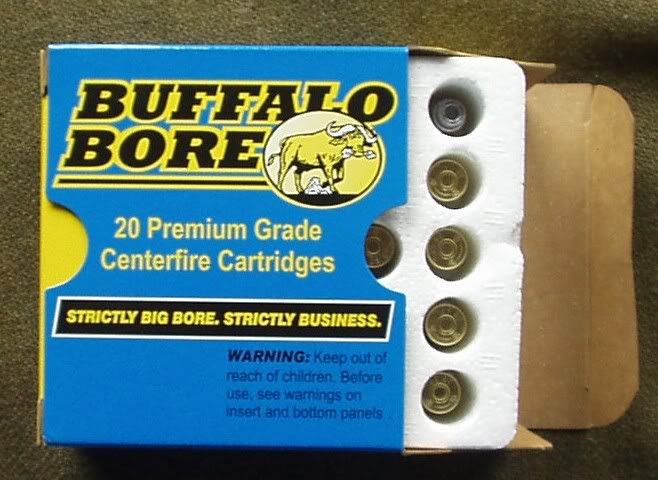
My two recently ordered boxes of Buffalo Bore's Standard Pressure Short Barrel Heavy .38 Special ammo made it to my door today, courtesy of UPS. Very interesting and, for some at least, expensive. The 2 boxes of 20 rounds cost me $53+ dollars. I think this is a boon for the non-reloader who wants to use his non +P rated S&W or Colt revolver for concealed carry or home defense. As you can see by following the link, there are 3 loads but I chose the more traditional 158 gr. LHP load. Looks good so far.

As you can see here, the hollow point of the Buffalo Bore round on the right is substantially larger than of the Winchester 158 gr. LSWCHP FBI load on the left. This and the substantially softer bullet should promote expansion at the slightly reduced velocities one will get from the standard pressure loading. I'm certain attackers won't notice the difference at arms length distance. So, after a quick check to ascertain the gun shoots to POA at self defense distances, I switched from the .45 Auto to the Detective Special.

In the Simply Rugged Silver Dollar with inside out loops, I'm ready to head to work tomorrow and the gun is ready to do double duty as the second bedside gun tonight. One that I'm confident Mrs. Hobie can use as a last resort defence.

Saturday, April 14, 2007

Winchester Product Recall

PRODUCT WARNING AND RECALL NOTICE: WINCHESTER® WILDCAT® 22 & WINCHESTER® XPERT® 22


4/6/2007
Olin Corporation, through its Winchester Division, is recalling several lots of its WILDCAT® 22 (Symbol Number WW22LR) and XPERT® 22 (Symbol Number XPERT22) 22 Long Rifle rimfire ammunition.

Lot Numbers containing Letters: XN, YA, YB or YC

Through extensive evaluation Winchester has determined the above lots of WILDCAT® 22 and XPERT® 22 ammunition may contain double powder charges. Double powder charge weight ammunition may cause firearm damage, rendering the firearm inoperable, and subject the shooter to a risk of personal injury and/or death when fired.

DO NOT USE WINCHESTER® WILDCAT® 22 RIMFIRE AMMUNITION WITH LOT NUMBERS CONTAINING LETTERS XN, YA, YB or YC. The ammunition Lot Number is imprinted (stamped without ink) on the outside of the right tuck flap of the 50-round box, as indicated here:


DO NOT USE WINCHESTER® XPERT® 22 RIMFIRE AMMUNITION WITH LOT NUMBERS CONTAINING LETTERS XN, YA, YB or YC. The ammunition Lot Number is imprinted (stamped without ink) on the outside of the top tuck flap of the 500-round box, as indicated here:


To determine if your ammunition is subject to this notice, review the Lot Number. If the Lot Number contains the letters XN, YA, YB or YC return the ammunition to Winchester via United Parcel Service (UPS). Securely pack the ammunition into a corrugated cardboard box, write “CARTRIDGES, SMALL ARMS ORM-D” on the outside, and ship to:

Olin Corporation – Winchester Division
Tile Warehouse
Powder Mill Road, Gate 4A
East Alton, IL 62024
Attention: 22LR Recall

Please include your name, address, and phone number. Winchester will send you coupons good for replacement ammunition from your local Winchester dealer.

This notice applies only to WILDCAT® 22 and XPERT® 22 rimfire ammunition with Lot Numbers containing the letters XN, YA, YB or YC. Other Symbol Numbers or Lot Numbers are not subject to this recall and should not be returned to Winchester.

If you have any questions concerning this recall please call toll-free 866-423-5224 (U.S. & Canada), write to the above address, or visit our website at www.winchester.com.

We apologize for this inconvenience.

Thursday, April 05, 2007

For Guns Requiring Standard Pressure Ammo

Tim Sundles at Buffalo Bore has STANDARD pressure ammo with +P or near +P performance. He's just released this but it is just the ticket for those of us antiquarians using old guns for self defense. He says that the bullets used in Item No. 20C/20 are so soft that he has to take special precautions in shipping the bullets. I've got two boxes on order and we'll see but these should be perfect for my Detective Special.

Wednesday, February 21, 2007

Bought Some More .22 LR Today

With metal prices rising and the Dem/S seemingly hell-bent to give Iran all the time they need to destroy us I feel like this is what I need to concentrate on for the time being. That is, accumulating ammo and practicing. This "old" man might be in a panic but I think that the terrorists coming to these shores with a nuke from Iran and destroying our economy is tremendously more likely than humans affecting global climate change. I am worried about it and taking steps to mitigate likely negative effects on my family.

Meanwhile, Winchester rimfire ammo seems to be becoming non-existent. I wish Winchester would get their new Oxford, MS plant up and running.

Saturday, February 17, 2007

Winchester and .22 Rimfire Ammo Non-Availability

I suppose that I am pretty dense. I only recently discovered that there was little Winchester .22 Rimfire ammo available out there, most of it stuff I don't want. Availability date of new stocks unknown. Why? Because Winchester is relocating .22 rimfire ammo production from East Alton, IL to Oxford, MS. Unfortunately they have apparently neglected to actually set up production at the new site before leaving the old site. Thus, no new ammo. Oh joy. Let me get all my .22s sighted for something other than the .22 Powerpoint HP and just see if I come back to you.